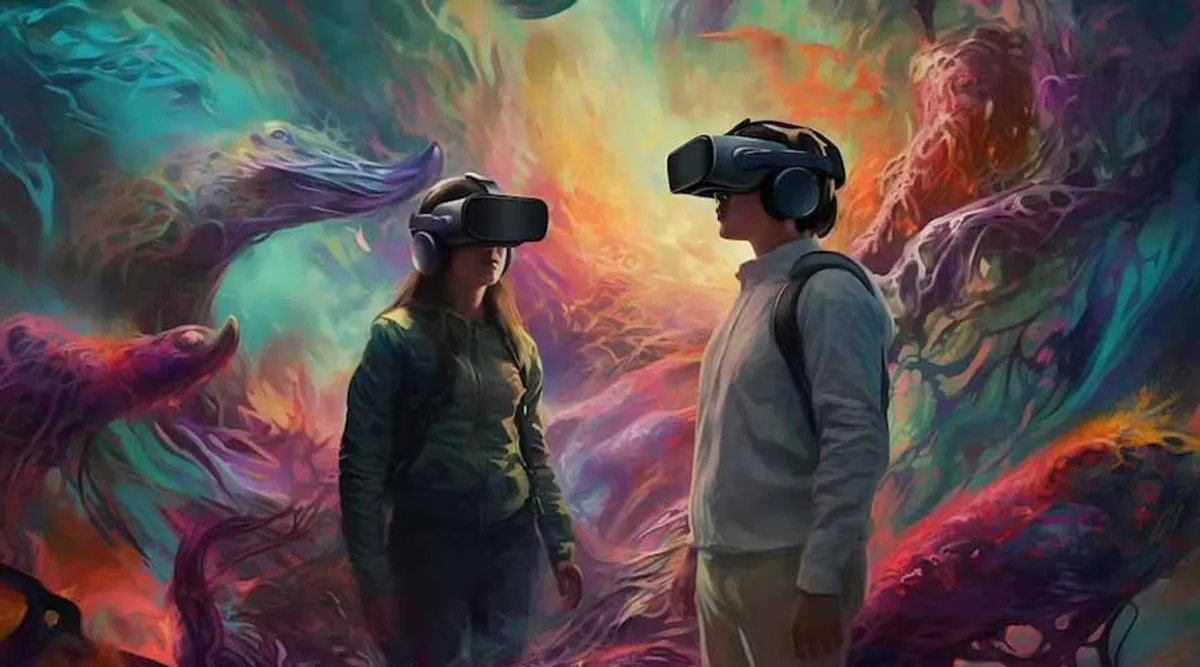
Once seen primarily as tools for immersive entertainment, Virtual Reality (VR) and Augmented Reality (AR) have rapidly evolved into transformative technologies across a wide range of industries. From education and healthcare to retail and manufacturing, these immersive tools are driving real-world impact — creating value far beyond their gaming roots.
🏥 Healthcare: Healing in 3D
VR and AR are reshaping medical training, treatment, and patient care:
- Surgical Training: Platforms like Osso VR allow medical professionals to practice procedures in a risk-free virtual environment.
- Mental Health: VR is being used for exposure therapy in treating PTSD and phobias, helping patients confront fears in controlled scenarios.
- Pain Management: Immersive VR experiences are being used as a distraction tool for patients undergoing painful treatments, reducing reliance on medication.
🎓 Education and Training: Learning by Doing
In education, VR and AR are moving students from passive learning to active participation:
- Virtual Classrooms: Apps like ENGAGE and AltspaceVR are enabling immersive learning experiences, even in remote settings.
- AR Textbooks: Augmented overlays bring lessons to life, allowing students to visualize complex structures — from molecules to engines.
- Corporate Training: Companies like Walmart and Boeing are using VR for employee training in customer service and safety, boosting retention and engagement.
🛍️ Retail: Try Before You Buy
Retailers are adopting AR and VR to enhance customer experience and reduce return rates:
- Virtual Try-Ons: AR allows shoppers to preview clothes, eyewear, or cosmetics on themselves through apps like Lenskart and Sephora.
- VR Showrooms: Brands like IKEA and Lowe’s are letting customers explore and customize virtual home layouts before purchase.
- Interactive Packaging: AR is being used to deliver engaging content when consumers scan a product’s label or packaging.
🏗️ Manufacturing and Design: From Concept to Reality
AR and VR are optimizing prototyping, maintenance, and on-site operations:
- Digital Twins: Engineers can create virtual replicas of machines or entire factories to simulate and test performance in real time.
- AR Instructions: Field workers equipped with AR headsets get step-by-step guidance overlaid onto real-world equipment, improving accuracy and speed.
- Collaborative Design: Teams across geographies can now design and refine products in shared virtual spaces using platforms like Gravity Sketch.
🏨 Travel and Real Estate: Previewing Experiences
These immersive tools are revolutionizing how people explore locations and make investment decisions:
- Virtual Property Tours: Buyers and renters can “walk through” homes and commercial spaces from anywhere in the world.
- AR Navigation: Enhanced real-world directions via smartphones or AR glasses are making city exploration more intuitive.
- Destination Previews: VR experiences of hotels, resorts, or travel adventures are helping consumers book with confidence.
🎬 Media and Collaboration: A New Creative Frontier
AR and VR are changing the way we create, consume, and collaborate:
- 360° Storytelling: Filmmakers and journalists are leveraging VR for immersive narratives that place viewers inside the story.
- Remote Collaboration: Virtual meeting rooms are being adopted by global teams as interactive alternatives to Zoom calls.
- Live Events: AR overlays at concerts and sporting events are adding layers of entertainment and engagement for audiences.
🌐 The Road Ahead
As hardware becomes more accessible and 5G connectivity improves, the applications of VR and AR will only continue to grow. With the launch of advanced devices like Apple Vision Pro and Meta Quest 3, the blending of digital and physical worlds is entering a new era — one that goes far beyond play.