Physical Address
304 North Cardinal St.
Dorchester Center, MA 02124
Physical Address
304 North Cardinal St.
Dorchester Center, MA 02124

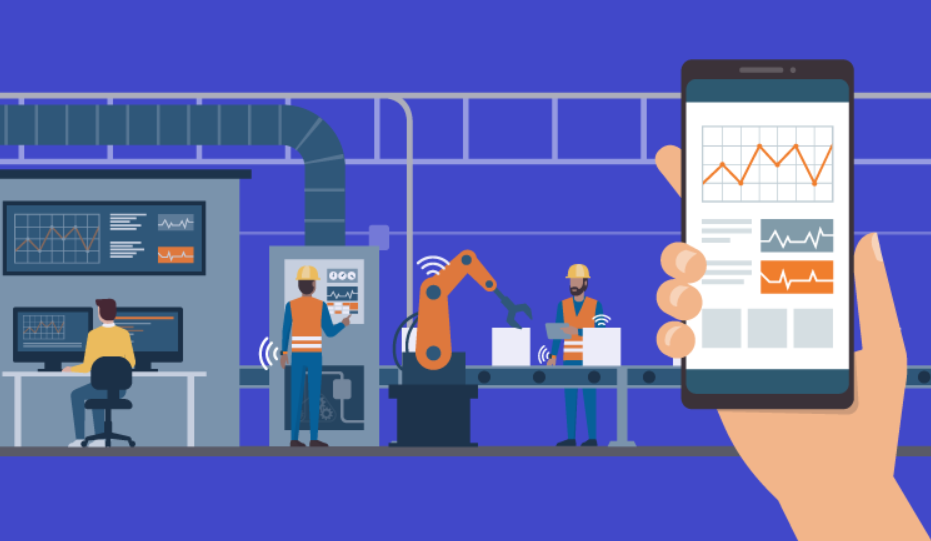
The rise of Industrial Internet of Things (IIoT) is reshaping the manufacturing landscape, driving significant improvements in productivity, operational efficiency, and cost reduction. By connecting machines, sensors, and systems through smart networks, IIoT enables real-time data collection, predictive maintenance, and automated decision-making. As global supply chains face increasing pressure to become more resilient and efficient, IIoT is emerging as a critical tool for manufacturers to stay competitive and agile.
The global IIoT market is expected to grow from $330.6 billion in 2024 to $621.3 billion by 2030, at a CAGR of 11.2%. Leading manufacturers are investing in connected devices and AI-driven insights to minimize downtime, optimize energy use, and improve overall equipment effectiveness (OEE).
Industrial IoT refers to the use of internet-connected devices, sensors, and software in manufacturing and industrial settings to collect, analyze, and act on data. Unlike consumer IoT, which focuses on smart homes and personal devices, IIoT focuses on enhancing industrial processes and supply chains.
✅ Smart Sensors – Collect data on temperature, pressure, vibration, and more.
✅ Edge Devices – Process data at the source to reduce latency.
✅ Cloud Platforms – Store and analyze large datasets.
✅ AI and Machine Learning – Generate insights and automate decision-making.
✅ Digital Twins – Virtual models that replicate physical assets for simulation and analysis.
IIoT enables predictive maintenance by monitoring the health of equipment in real-time. Machine learning algorithms analyze sensor data to predict equipment failures before they happen.
🔹 Reduced unplanned downtime by up to 50%.
🔹 Improved equipment lifespan through proactive maintenance.
🔹 Lower maintenance costs by up to 30%.
📌 Example:
IIoT powers smart factories where machines communicate and adjust production in real-time based on demand and supply chain conditions.
🔹 Adaptive production lines that adjust to changes in real-time.
🔹 Automated quality control using computer vision and AI.
🔹 Increased production efficiency by up to 20%.
📌 Example:
IIoT provides end-to-end visibility into supply chain operations, allowing manufacturers to track inventory, shipments, and production status in real-time.
🔹 Improved demand forecasting using AI-powered insights.
🔹 Reduced inventory holding costs by up to 25%.
🔹 Enhanced supplier coordination and response time.
📌 Example:
IIoT helps manufacturers monitor and optimize energy usage, reducing costs and environmental impact.
🔹 Real-time energy consumption monitoring.
🔹 Automated load balancing to minimize waste.
🔹 Lower energy costs by 10%–20%.
📌 Example:
IIoT-based wearables and safety systems improve workplace safety by monitoring worker health and alerting supervisors to potential hazards.
🔹 Wearable devices track worker fatigue and body temperature.
🔹 Automated shutdowns in case of hazardous conditions.
🔹 Reduced workplace accidents by up to 30%.
📌 Example:
IIoT-based computer vision and machine learning models analyze production quality in real-time.
🔹 Automated inspection with AI and cameras.
🔹 Real-time defect detection and correction.
🔹 Reduced defect rates by up to 40%.
📌 Example:
| Region | Growth Rate |
|---|---|
| North America | 10.5% |
| Europe | 11.2% |
| Asia-Pacific | 13.4% |
| Latin America | 9.8% |
| Middle East & Africa | 8.7% |
| Company | Headquarters | Focus Area | Valuation |
|---|---|---|---|
| Siemens | Germany | Smart factories, predictive maintenance | $120B |
| GE Digital | USA | Asset performance management | $60B |
| Schneider Electric | France | Energy management, automation | $100B |
| Bosch | Germany | Automotive and industrial automation | $90B |
| Rockwell Automation | USA | Industrial automation | $35B |
| ABB | Switzerland | Robotics and industrial automation | $50B |
| Honeywell | USA | Connected plant solutions | $130B |
🔸 Cybersecurity Risks – Increased network connectivity exposes manufacturing plants to cyberattacks.
🔸 High Implementation Costs – Upfront costs for IIoT infrastructure and systems.
🔸 Data Privacy Issues – Protecting sensitive production and operational data.
🔸 Skill Shortages – Lack of expertise in IIoT systems and data analysis.
📌 AI-Driven Predictive Analytics – Machine learning models to anticipate equipment failures and optimize production.
📌 5G-Powered Connectivity – Faster data transfer and low latency for real-time operations.
📌 Autonomous Factories – Self-optimizing production lines and automated maintenance.
📌 Edge AI – AI models running directly on machines for faster decision-making.
📌 Digital Twins – Virtual factory models to simulate production scenarios and improve efficiency.
Industrial IoT is at the forefront of the fourth industrial revolution (Industry 4.0), transforming how manufacturers operate and compete. By enabling real-time insights, predictive maintenance, and automated decision-making, IIoT is driving unprecedented levels of efficiency, productivity, and cost savings. As manufacturers continue to embrace IIoT, the future of industrial production will be more connected, intelligent, and resilient.
👉 How long until we see fully autonomous factories powered entirely by IIoT and AI?